Nobody saw the feed moving this fast. A few years ago, posting three times a week felt like enough. Now that same brand is invisible, and the one showing up everywhere at the right time with weirdly relevant content is the one that learned to put AI to work.
The expert team at Digicorns Technologies has watched this play out across industries. Brands that treat AI as a genuine part of their workflow stop reacting and start leading. The ones still doing everything by hand? Burning hours on tasks that honestly do not need a human anymore.
There is simply too much happening for any team to track manually. Thousands of comments. Shifting trends. Competitor campaigns running overnight. That is where AI algorithms earn their place.
They sort through the noise constantly, surface what matters, and track how audiences respond in real-time. The brands winning on social media right now are not the most creative ones. They are the most informed ones.
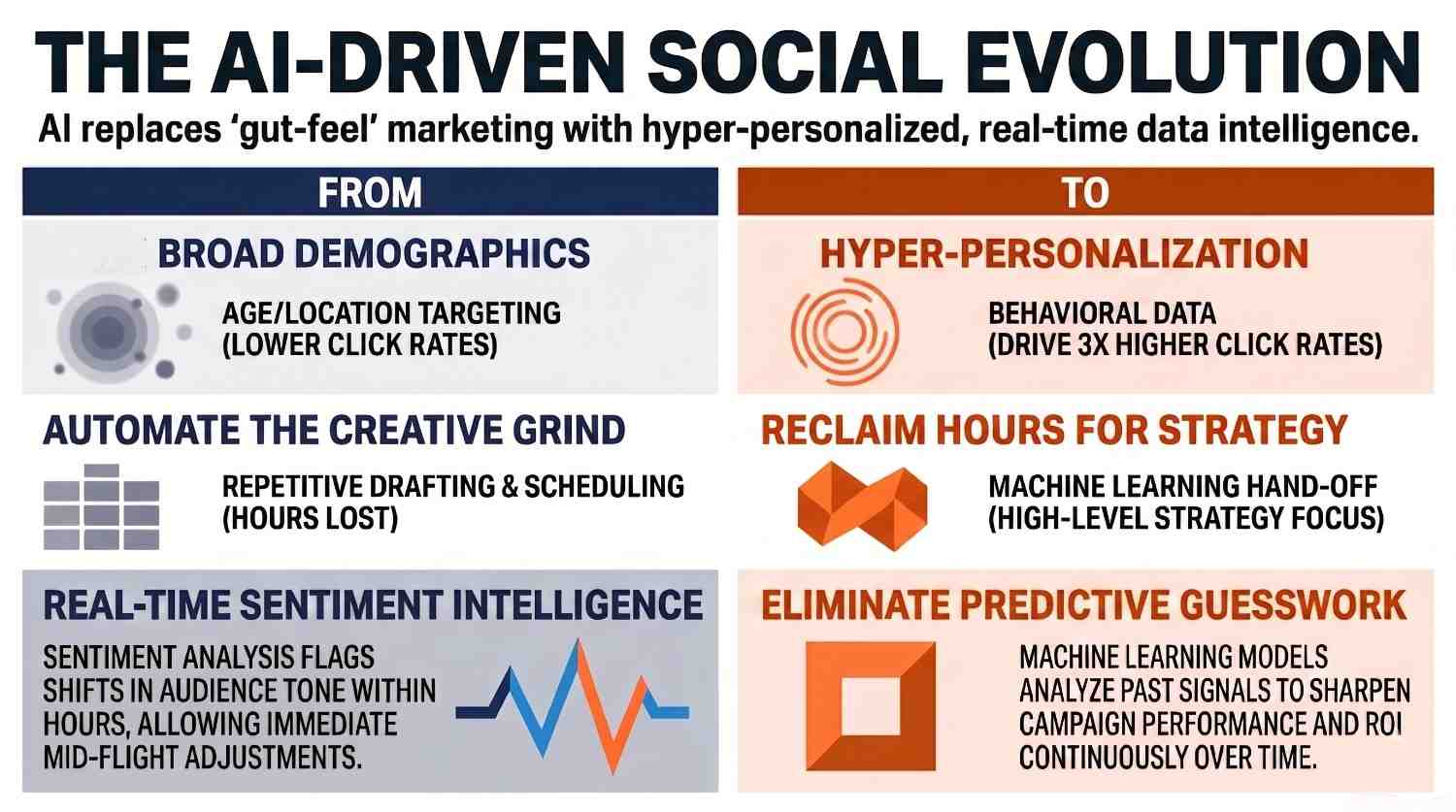
Hyper personalization is genuinely different from basic targeting methods. Standard targeting says: show this ad to women, 28 to 40, in California. Fine, but that bucket includes someone who runs marathons and someone who has not exercised since high school. What AI enables is a much tighter read.
It pulls from user data, browsing patterns, and past engagement, then shapes what each person sees. It is often seen that the AI-personalized version of a campaign pulls three times the click rate compared to broad demographic targeting, and those people actually bought something.

Ask any social media manager what eats the most hours and content creation lands near the top every time. Not the big ideas, those are the fun part. It is the grind: five caption variations, the Tuesday hook, repurposing last month’s blog for Instagram.
Tools built on machine learning can generate content drafts fast enough that the job shifts to editing rather than starting from scratch. Content strategies get steadier, publishing becomes consistent, and AI enhances the process further by learning what actually performs for that specific brand.
Customer engagement on social media is relentless. Another comment, another DM, another complaint about a delayed order. Most brands stay permanently behind, and that gap costs trust. AI patches it fast. Chatbots handle routine questions overnight, automated systems route the complex ones to people, and sentiment analysis reads the tone of everything being said about the brand across platforms. When a product launch starts collecting a weird undertone in comments, brands tracking sentiment catch it in hours. For customer service, that early warning alone is worth the investment.
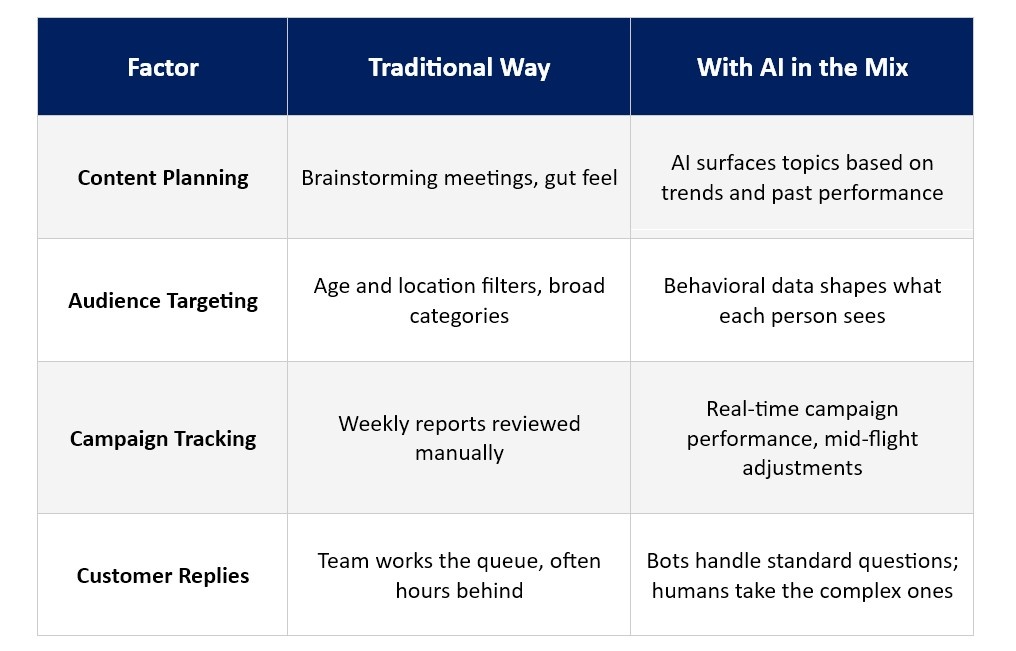
Here’s the comparison between traditional and AI-driven social media approaches:
Predictive analytics takes the guesswork out of decisions that used to feel like educated gambling. Teams no longer wait until a campaign ends to find out what worked. Machine learning models run analysis continuously, using past data as a base and layering in new signals as they arrive. Each campaign feeds data into the next. Campaign performance gets better over time because the predictions keep sharpening. The information was always there. AI just makes it usable.
Used properly, AI absolutely saves time on the mechanical parts of the job: scheduling, monitoring mentions, drafting captions, pulling reports. Marketing efforts that involve repetition benefit most. Hand those off and the team gets real hours back for work that needs actual judgment.
There are also a few traps. Teams that publish AI output without making any changes create content that sounds artificial because audiences can detect this fact. Detection tools become confused when they encounter sarcasm and slang which makes it essential to treat sentiment reports as initial assessment tools rather than complete judgments. Organizations must collect user data through responsible means because this practice has become mandatory. Regulators and audiences are both paying attention.
When brands genuinely leverage AI across their social presence, marketing strategies stop being built on gut feel. Decisions get grounded in what the data actually shows. Better data means better customer experiences at every touchpoint. The ad shows up when someone is in the market. The reply comes before frustration sets in.
AI enhances what every person on the team can do. The analyst sees patterns faster. The writer gets clearer feedback on what lands. High-quality output comes from teams with the mental space to think clearly, and AI creates that space by absorbing the repetitive load. Marketing efforts compound over time when the whole workflow is built around it.
The brands pulling ahead have figured out which parts of their workflow AI handles better and freed their team for decisions that actually need human judgment.
That is exactly what Digicorns Technologies helps clients do. Whether the focus is content strategies, improving customer engagement, or cutting hours on tasks a machine handles better, the goal is always the same: right tools in the right places.
A: AI helps brands process user data, automate scheduling, generate content drafts, run sentiment analysis, and track campaign performance without drowning a team in manual work.
A: Hyper personalization uses AI algorithms to tailor content for each person, pulling from behavioral data and past interactions rather than broad demographic categories.
A: Most AI tools are scalable and budget friendly. Smaller teams typically start with scheduling and analytics, adding more capability once those initial tools deliver results.
A: No. AI absorbs repetitive work, but strategy, brand voice, creative judgment, and real relationship building still require people who genuinely understand the audience.
A: Sentiment analysis reads comments and messages to gauge how audiences feel in real time, helping teams flag problems early and focus on content that is clearly landing.

Type "best [your industry] near me" into ChatGPT right now. Go on, try it. If your business doesn't show up…
Customers love personalized experiences. They expect businesses to be aware of their specific requirements and fulfill them on time with…













Privacy Policy Terms and Conditions Cookies Policy Return/Refund/Cancellation Policy
©2026 DigiCorns Technologies.
All Rights Reserved.